
The supreme Cement Mortar Spraying Pump for 2025 excels in material delivery consistency, operational ease, and long-term reliability. This leading equipment offers unparalleled productivity gains and cost savings through optimized performance and reduced downtime. The mortar concrete pump market currently stands at an estimated USD 3.5 billion in 2024. The global spraying and plastering machine market also reached an estimated USD 2.56 billion. Experts anticipate the cement mortar sprayer market will grow at a CAGR of 9.5%, reaching USD 2.5 billion by 2033 from USD 1.2 billion in 2024. The best Cement Mortar Spraying Pump for 2025 aligns perfectly with project scale, material requirements, and operational budget.
Key Takeaways
- Choose a cement mortar spraying pump based on project size, material needs, and budget.
- Look at a pump’s capacity, pressure, and material compatibility for good performance.
- Consider a pump’s power use, easy cleaning, and quick setup for efficient work.
- Modern pumps have smart controls, remote monitoring, and strong safety features.
- Leading brands offer pumps for precision, power, or versatility in construction.
- Future pumps will use digital tools, robots, and eco-friendly designs.
- A good pump saves money by cutting labor costs and reducing material waste.
- Durability and easy maintenance help a pump last longer and work better.
Key Evaluation Criteria for a Cement Mortar Spraying Pump
Choosing the right cement mortar spraying pump requires careful consideration of several critical factors. These criteria ensure the selected equipment meets project demands, operates efficiently, and provides long-term value.
Performance Metrics of a Cement Mortar Spraying Pump
Pumping Capacity and Flow Rate
A pump’s ability to move material directly impacts project timelines. Pumping capacity indicates the volume of material a pump can deliver per hour. For instance, a standard mortar spraying pump offers a transport capacity of 6-8 m³/h. Smaller concrete pumps, also suitable for mortar, typically provide 1.5-1.8 m³/h. A double piston mortar plastering pump, like the SUB 8.0, can achieve 8 m³/h. Flow rate, another crucial metric, measures the speed of material delivery. A hydraulic double piston mortar plastering pump can have a flow rate of 60 kg. Under optimal conditions, wet spraying systems allow mortar application at rates up to 5 gallons per minute (18.9 liters per minute). An electric sand cement mortar spray plaster machine typically has an output of 3 m³/h.
Spraying Pressure and Distance
The spraying pressure determines how far and effectively the pump can project material onto a surface. Higher pressure allows for greater reach and ensures proper material adhesion, especially on elevated or distant areas. The distance a pump can spray directly influences its suitability for various job sites, from small rooms to large facades.
Material Compatibility
A versatile pump handles different material types. The material’s characteristics significantly influence spray behavior and placement. Material flowability, for example, can slightly improve spray behavior. Higher material viscosity often results in a more consistent spray, enhancing the overall performance of shotcrete. Nozzle geometry also significantly impacts the spray and placement characteristics of wet-mix shotcrete.
Operational Efficiency of a Cement Mortar Spraying Pump
Power Consumption and Energy Efficiency
Operational costs are a major concern. Power consumption varies between pump types. An electric cement mortar spraying machine typically uses 5.5 KW, though some models, like multifunctional or thin fire retardant machines, might consume 2.2 KW or 3 KW. Diesel/gasoline powered machines often require 14 HP or 8.5 HP for operation. Evaluating these figures helps assess long-term energy expenses.
Ease of Cleaning and Maintenance
Simple cleaning and maintenance procedures reduce downtime and extend equipment life. Pumps designed for easy access to components and quick wash-downs save valuable time on the job site.
Setup and Teardown Time
Efficient setup and teardown contribute to overall project productivity. Pumps with intuitive designs and minimal assembly requirements allow crews to start and finish tasks faster.
Advanced Features of a Cement Mortar Spraying Pump
Smart Controls and Automation
Modern pumps incorporate smart controls and automation. These features offer high efficiency for large area spraying, significantly faster than manual application. They also ensure uniform coating thickness, preventing inconsistencies common with manual methods.
Remote Monitoring Capabilities
Some advanced pumps offer remote monitoring. This allows operators or supervisors to track performance, diagnose issues, and manage operations from a distance, enhancing oversight and responsiveness.
Safety Features and Ergonomics
Safety is paramount on any construction site. Pumps with robust safety features protect operators. Ergonomic designs reduce physical strain, improving comfort and productivity during long working hours.
Durability and Build Quality
The durability and build quality of a cement mortar spraying pump determine its lifespan and reliability. High-strength alloy materials for key components provide outstanding wear resistance, low maintenance requirements, and a long service life.
Leading Cement Mortar Spraying Pump Contenders of 2025
The year 2025 showcases several manufacturers pushing the boundaries of cement mortar spraying technology. These leading brands offer distinct advantages, catering to various project demands and operational preferences. They consistently deliver high-performance solutions for the construction industry.
Brand A: Innovation and Precision in Cement Mortar Spraying
Key Strengths and Market Position
Brand A establishes itself as a pioneer in innovative spraying solutions. It consistently integrates cutting-edge technology into its equipment. The company holds a strong market position among contractors prioritizing advanced features and precise material application. Its focus on research and development leads to highly efficient and accurate machines.
Signature Models and Their Focus
Brand A’s signature models often feature smart control systems and automated processes. For example, the “AeroSpray Pro” series focuses on ultra-fine atomization and consistent layer thickness. These models excel in architectural finishes and specialized coatings where precision is paramount. They offer unparalleled control over spray patterns and material consumption.
Brand B: Power and Reliability in Cement Mortar Spraying
Key Strengths and Market Position
Brand B is synonymous with robust construction and unwavering reliability. Its equipment withstands the most demanding job site conditions. The brand commands a significant market share among large-scale construction firms and industrial contractors. They value durability and continuous operation.
Signature Models and Their Focus
The “TitanFlow” line represents Brand B’s commitment to power and endurance. These heavy-duty machines handle high-viscosity materials and deliver exceptional pumping capacity over long distances. They are ideal for infrastructure projects, tunnel lining, and large commercial buildings. Their design minimizes downtime, ensuring maximum productivity.
Brand C: Versatility and User-Friendliness in Cement Mortar Spraying
Key Strengths and Market Position
Brand C distinguishes itself through exceptional versatility and user-centric design. Its products cater to a broad spectrum of applications, from intricate indoor tasks to extensive outdoor projects. The brand enjoys popularity among renovation specialists and smaller crews. They appreciate adaptable equipment and ease of use.
Signature Models and Their Focus
Brand C’s “Multi-Tasker 3000″ exemplifies its focus on adaptability. This multi-function electric spray machine handles cement, dry mortar, waterproofing compounds, and various paints. It includes multiple sprinkler heads for quick, uniform application. Operators can easily replace nozzles without affecting machine use. The powerful performance ensures efficient, precise application, saving time and money.
The “ErgoSpray Pro” model further highlights Brand C’s user-friendliness. It features ergonomic hopper handles for comfortable use. A special 40-degree hopper neck allows for spraying horizontal surfaces and GFRC decorative molds. The machine includes four spray nozzles (1/8”, 3/16”, 1/4”, and 5/16”) to achieve different texture finishes. An air adjustment valve provides spraying control, and an air quick connector simplifies setup. Fluid volume control is conveniently located at the back of the gun. This Cement Mortar Spraying Pump offers a comprehensive solution for diverse needs.
Brand D: Emerging Technologies and Value in Cement Mortar Spraying
Key Strengths and Market Position
Brand D positions itself as a forward-thinking innovator in the cement mortar spraying sector. It focuses on integrating cutting-edge technologies to deliver exceptional value. This brand often introduces features like advanced sensor technology and predictive maintenance algorithms. These innovations help optimize performance and reduce unexpected downtime. Brand D appeals to contractors who seek cost-effective solutions without compromising on modern capabilities. Its market position is strong among small to medium-sized enterprises and those prioritizing technological advancement. They offer competitive pricing while still providing robust, tech-driven equipment. This approach allows a broader range of businesses to access high-efficiency spraying solutions.
Signature Models and Their Focus
Brand D’s signature models showcase its commitment to smart, value-driven design. For example, the “EcoSpray 5000″ series integrates IoT connectivity. This feature allows operators to monitor pump performance remotely. It also provides real-time diagnostics. The EcoSpray 5000 focuses on energy efficiency, utilizing smart power management systems. These systems reduce electricity consumption during operation. This model is ideal for projects where energy costs are a significant concern. It also suits sites requiring detailed operational data for project management.
Another notable model, the “ModuFlex Pro,” emphasizes modularity and ease of upgrade. This Cement Mortar Spraying Pump allows users to swap out components easily. They can adapt the pump for different material types or project scales. The ModuFlex Pro includes an intuitive digital interface. This interface simplifies operation and troubleshooting for less experienced users. Its focus on user-friendliness and adaptability makes it a popular choice for diverse construction tasks. Brand D consistently delivers reliable performance and embraces future-proof technology. This strategy ensures its products remain relevant and valuable in a rapidly evolving industry.
In-Depth Comparison of Cement Mortar Spraying Pump Efficiency
Evaluating the efficiency of a Cement Mortar Spraying Pump involves a detailed look at its operational capabilities and technological advancements. This comparison helps contractors select the best equipment for specific project demands.
Pumping Capacity and Flow Rate Showdown
Pumping capacity and flow rate directly influence project speed and labor requirements. Different projects demand varying levels of material output.
High-Volume Applications
High-volume applications, such as large commercial buildings or extensive infrastructure projects, require pumps with superior pumping capacity and flow rates. These powerful machines move significant amounts of mortar quickly. They minimize project timelines and reduce labor costs. A pump capable of delivering 8-10 cubic meters per hour significantly accelerates progress on massive construction sites. This high output ensures a continuous supply of material, preventing delays in application.
Medium-Scale Projects
Medium-scale projects, including residential developments or smaller commercial renovations, benefit from pumps offering moderate capacities. These pumps balance efficiency with practicality. They provide sufficient material flow for consistent work without the excessive power consumption of larger units. A pump delivering 3-5 cubic meters per hour often proves ideal for these applications. It offers efficient material handling for tasks like plastering multiple homes or renovating office spaces.
Energy Efficiency and Operating Costs
Energy efficiency directly impacts the long-term financial viability of a Cement Mortar Spraying Pump. Operating costs represent a significant factor in equipment selection.
Long-Term Savings Analysis
Energy-efficient pumps lead to substantial long-term savings. Machines designed to optimize power consumption reduce electricity or fuel expenses over their operational lifespan. For instance, a pump with advanced motor technology might consume 20% less energy than a standard model. This difference translates into thousands of dollars saved annually, especially for frequently used equipment. Contractors often consider the initial investment against these projected operational savings.
Power Source Flexibility
Power source flexibility offers significant advantages on diverse job sites. Pumps capable of operating on multiple power sources, such as electric, diesel, or gasoline, provide adaptability. Electric pumps suit indoor projects or sites with readily available power grids. Diesel or gasoline-powered units excel in remote locations lacking electrical infrastructure. This versatility ensures continuous operation regardless of site conditions, preventing costly downtime.
Smart Features and Automation Advantages
Modern Cement Mortar Spraying Pumps incorporate smart features and automation. These technologies enhance precision, reduce manual effort, and improve overall project management.
Precision Control Systems
Precision control systems ensure consistent material application. These advanced systems allow operators to fine-tune spray patterns, pressure, and material flow with high accuracy. Digital interfaces and programmable settings enable precise adjustments for different mortar types and desired finishes. This level of control minimizes material waste and achieves uniform coating thickness. It results in superior quality finishes and reduces the need for rework.
Diagnostic and Predictive Maintenance
Diagnostic and predictive maintenance capabilities represent a significant leap in operational efficiency. Smart pumps monitor their internal components and performance metrics in real-time. They can detect anomalies or potential issues before they escalate into major breakdowns. These systems provide early warnings, allowing for proactive maintenance scheduling. This approach minimizes unexpected downtime, extends the equipment’s lifespan, and reduces repair costs.
Durability, Maintenance, and Longevity
A cement mortar spraying pump represents a significant investment. Its durability, ease of maintenance, and overall longevity directly impact a project’s budget and timeline. Robust construction ensures the machine withstands harsh job site conditions and delivers consistent performance over many years.
Material Quality and Wear Resistance
The quality of materials used in a pump’s construction directly determines its lifespan. Critical components, constantly exposed to abrasive mortar, require exceptional wear resistance. Manufacturers often use hardened steel or ceramic for valves, seals, and pistons. These materials offer superior protection against abrasion. For instance, ceramic components are known for their hardness and smooth surface. This helps them withstand the constant friction from mortar.
The impeller, a key part of the pumping mechanism, often features high-chromium cast iron or ceramic. These materials provide excellent wear resistance against abrasive mortar. The volute casing, which guides the mortar flow, typically uses ductile iron or stainless steel. These are suitable wear-resistant materials. Seals, which maintain tight connections and prevent leaks, often consist of high-hardness rubber or special polymers. These materials provide good wear resistance due to constant contact with moving parts. High-quality materials minimize wear and tear. This reduces the frequency of part replacements and extends the pump’s operational life.
Serviceability and Parts Availability
Easy serviceability and readily available parts are crucial for minimizing downtime. A pump designed for quick access to internal components simplifies routine inspections and repairs. Manufacturers who offer a comprehensive network for spare parts ensure that contractors can quickly obtain replacements. This prevents prolonged interruptions to work schedules. Good serviceability also reduces labor costs associated with maintenance. It allows technicians to perform tasks efficiently. A reliable supply chain for parts ensures the pump remains operational for its intended lifespan.
User Experience and Ergonomics
A pump’s design significantly impacts the operator’s experience. User-friendly features and ergonomic considerations enhance productivity, reduce fatigue, and improve overall job site safety.
Ease of Operation and Training
User-friendly controls and intuitive interfaces simplify pump operation. This reduces the learning curve for new operators. Technological advancements in pump efficiency and material handling consistency often come with user-friendly controls. These are key differentiators. Some models include reverse-flush functions or quick-disconnect parts. These features simplify post-job cleanup. Online instructional content also enhances user confidence. It helps them operate systems safely and efficiently.
Operators require both theoretical knowledge and practical hands-on experience. Investing in training programs and providing ongoing professional development opportunities for teams is crucial. Well-trained operators can independently set up, operate, maintain, and troubleshoot issues. They also understand emergency procedures and safety protocols. The efficiency of a concrete pump links directly to the operator’s skill level. This emphasizes the need for user-friendly pumps and adequate training.
Portability and Job Site Maneuverability
A pump’s portability and maneuverability directly affect its versatility on diverse job sites. Compact designs and lightweight construction allow for easy transport between locations. This is especially important for multi-story buildings or confined spaces. Features like robust wheels, balanced lifting points, and a small footprint enhance a pump’s ability to navigate challenging environments. Easy transport contributes to operational ease. It allows crews to position the pump optimally for each task. This saves time and labor, improving overall project efficiency.
Real-World Applications of Top Cement Mortar Spraying Pumps
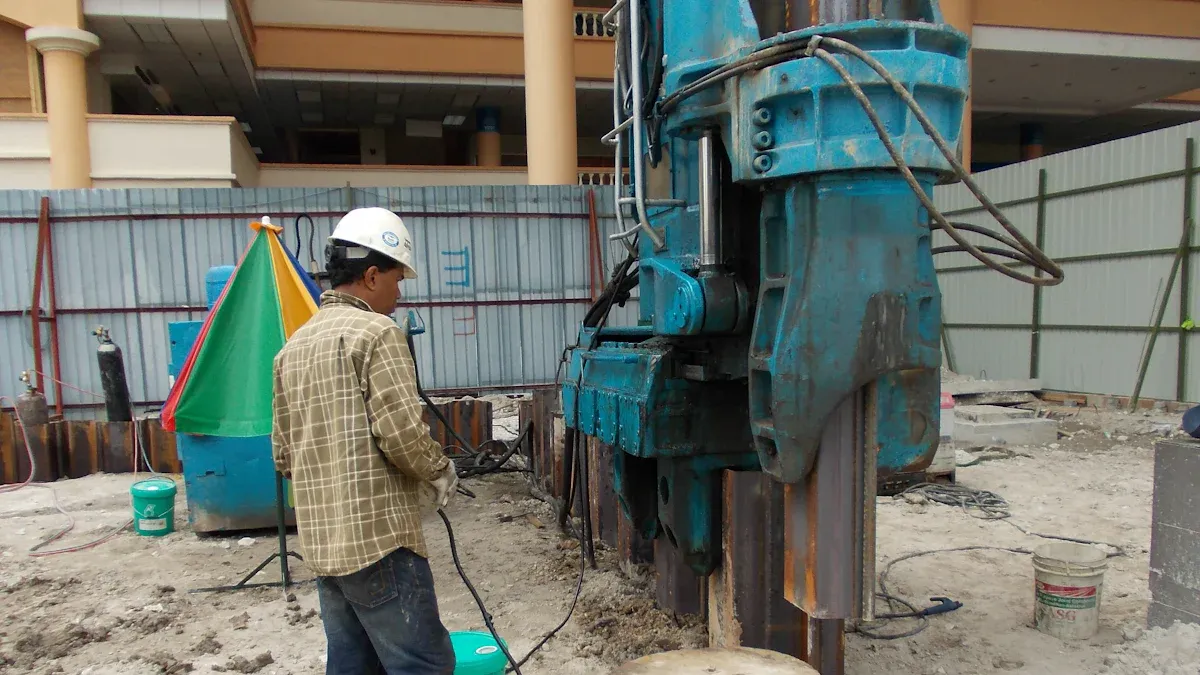
Cement mortar spraying pumps are indispensable tools across various construction sectors. They enhance efficiency and quality in diverse real-world applications. These machines adapt to different project scales and material requirements.
High-Rise Construction Projects
High-rise construction presents unique challenges. Cement mortar spraying pumps offer critical advantages in these demanding environments.
Efficiency Gains
Pumps significantly boost efficiency in high-rise construction. Pumping placement is faster than traditional methods like wheelbarrows or skid loaders. This saves manpower and equipment costs. Cranes and hoists are freed up for other essential construction operations, such as delivering materials. Pumps place concrete in areas difficult or impossible to reach by other methods, including upper floors of high-rise buildings. A continuous supply of pumped concrete helps maintain a steady work pace, increasing productivity. This allows crews to place floor slabs on upper floors before completing lower floors, offering weather protection. Overall, work efficiency improves by over three times. A team of eight skilled plasterers and four small workers can complete 1200-1500m² of plastering per day using spraying equipment. This compares to 35-50m² per day for a traditional skilled worker. Labor for material transportation is also significantly reduced as mortar pumps directly to the required floor. This accelerates overall construction schedules and reduces post-maintenance costs due to improved mortar quality, minimizing hollowing and cracking.
Reliability in Demanding Environments
Cement mortar spraying pumps demonstrate reliability in demanding construction environments through their inherent durability and consistent performance. They feature heavy-duty components for long-term reliability in harsh conditions. This also contributes to reduced maintenance, enhancing efficiency and lowering operational costs. Durability is achieved by using high-quality materials like high-grade steel, hardened alloy components, and abrasion-resistant coatings. These materials enable pumps to withstand prolonged use and adverse conditions. Robust design, precision engineering, and stringent quality control during manufacturing further ensure reliability. Key components such as hydraulic systems, pumping mechanisms, and electrical systems are engineered with redundant safety features and fail-safe mechanisms. This prevents unexpected breakdowns and ensures continuous operation. The construction and build quality, including reinforced frames, thick-walled tubing, and sturdy mounting bases, are crucial for enduring the stresses of concrete pumping.
Residential and Commercial Renovations
Cement mortar spraying pumps are also highly effective for residential and commercial renovation projects. They offer flexibility and economic benefits.
Versatility for Varied Tasks
These pumps provide great versatility for varied tasks in renovations. They handle different types of mortar, plaster, and stucco. This makes them suitable for interior wall finishes, exterior facade repairs, and ceiling applications. Their adjustable pressure and flow rates allow for diverse finishes, from smooth to textured.
Cost-Effectiveness for Smaller Crews
For smaller crews, these pumps offer significant cost-effectiveness. They reduce the need for extensive manual labor. This allows a smaller team to complete tasks faster. The efficiency gains translate into lower labor costs and quicker project completion times. This makes them an attractive investment for renovation businesses.
Specialized Mortar Applications
Beyond general construction, cement mortar spraying pumps excel in specialized applications. They deliver precision and handle unique material requirements.
Precision Spraying with Advanced Nozzles
Specialized applications often require precision. Advanced nozzles allow for highly accurate spraying. This ensures uniform coverage and minimal overspray. This precision is crucial for intricate architectural details or delicate restoration work. It also helps achieve specific aesthetic finishes.
Handling Unique Mixes
Some projects use unique mortar mixes. These include fireproof coatings, insulation mortars, or self-leveling compounds. Top spraying pumps are designed to handle these specialized materials. Their robust pumping mechanisms and material compatibility ensure effective delivery and application. This expands their utility beyond standard cement mortar.
Future Trends in Cement Mortar Spraying Pump Technology for 2025
The construction industry continually evolves. Cement mortar spraying pump technology will see significant advancements by 2025. These innovations will focus on digital integration, enhanced automation, and sustainable practices. They aim to boost efficiency, reduce costs, and improve environmental impact.
Integration with Digital Construction Workflows
Digital integration will transform how construction projects manage and execute spraying tasks.
BIM Compatibility and Data Analytics
Building Information Modeling (BIM) will play a crucial role. Pumps will integrate with BIM platforms. This allows for precise planning and execution of spraying operations. Data analytics will provide insights into material usage and project progress. Contractors seek equipment to reduce labor costs and project timelines. This drives the shift towards automation and productivity. The market also moves towards sustainable construction practices. This focuses on reducing material waste and improving application precision.
IoT for Remote Management
Internet of Things (IoT) technology will enable remote management of spraying pumps. Sensors on the equipment will transmit real-time data. This allows supervisors to monitor performance from off-site locations. IoT integration is an emerging trend for remote monitoring and predictive maintenance. This connectivity ensures consistent application, reduces waste, and enhances safety.
Enhanced Automation and Robotics
Automation and robotics will redefine the spraying process. They will lead to greater precision and safety.
Autonomous Spraying Systems
Robotic shotcrete systems are gaining traction. They offer precision, enhanced worker safety, and reduced labor needs. Modern robotic shotcrete rigs will feature advanced automation and remote-control interfaces. They will also have flexible nozzle arms and continuous performance monitoring. These systems will integrate with technologies like 3D printing and BIM. This enables robots to create complex, customized shapes. Industry leaders focus on developing smarter machines with deeper automation and cloud-based monitoring capabilities. Labor shortages and stringent safety regulations drive these advancements. Automated shotcrete machines combine hardware with software for seamless operation. Sensors will monitor pressure and flow rates. The control system will dynamically adjust parameters to maintain optimal spray quality.
AI-Powered Material Optimization
Artificial intelligence (AI) will optimize material usage. AI will enable smarter, more autonomous operations. It will improve precision and optimize maintenance schedules. AI-driven innovations will streamline workflows. They will reduce operational costs and enhance safety protocols. This aligns with Industry 4.0 principles. Specific AI applications include fully autonomous or semi-autonomous spraying machines with real-time adjustments. Predictive maintenance will use machine learning to forecast component failures. AI-powered sensors and vision systems will enhance precision and quality control.
Sustainable and Eco-Friendly Innovations
Future pumps will prioritize environmental responsibility.
Reduced Emissions and Noise Levels
New designs will focus on reducing emissions. Electric-powered pumps will become more prevalent. They produce zero direct emissions. Manufacturers will also implement noise reduction technologies. This creates quieter job sites.
Energy Recovery Systems
Energy recovery systems will capture and reuse waste energy. This improves overall energy efficiency. These systems will contribute to lower operational costs and a smaller carbon footprint.
Choosing the Best Cement Mortar Spraying Pump for Your Needs

Selecting the optimal cement mortar spraying pump requires a strategic approach. Project managers must align equipment capabilities with specific job requirements. This careful evaluation ensures maximum efficiency, cost-effectiveness, and superior application quality.
Matching Pump Capabilities to Project Scale
The size and scope of a construction project directly influence the type of cement mortar spraying pump a team needs. Matching pump capabilities to project scale prevents overspending on unnecessary features or under-equipping for demanding tasks.
Small to Medium Projects
Small to medium construction projects benefit from pumps offering versatility and ease of handling. These projects often include residential renovations, small commercial builds, or specialized repair work. For these applications, recommended pump capabilities include:
- Project Scale Assessment: Small pumps are ideal for residential projects or confined spaces where larger equipment cannot maneuver. They also suit smaller pours that do not require the high volume of a large pump.
- Pump Capacity (CY/hr): The pump’s output rate should carefully match job requirements. This avoids delays or material waste.
- Aggregate Size Compatibility: Ensure the pump can accommodate the type and size of aggregate in the concrete mix. This prevents blockages or damage.
- Durability and Ease of Maintenance: Prioritize a robust design for longevity. Simple maintenance procedures minimize downtime.
- Brand Reputation and After-Sales Service: Opt for manufacturers with positive reviews and reliable customer support. This ensures prompt issue resolution.
These considerations help teams select a pump that provides adequate power without excessive bulk, ensuring efficient operation in more constrained environments.
Large-Scale Industrial Applications
Large-scale industrial applications demand high-performance pumps with robust capabilities. These projects involve extensive areas, high volumes of material, and often continuous operation. Pumps for industrial use feature powerful engines, high pumping capacities, and extended reach. They handle large quantities of mortar over long distances and to significant heights. Their design prioritizes durability and sustained output, minimizing interruptions on critical infrastructure projects, large commercial complexes, or extensive civil engineering works. These machines often integrate advanced automation and monitoring systems to manage complex spraying tasks efficiently.
Considering Material Types and Viscosity
The type of material a team plans to spray significantly impacts pump selection. Different mortars and compounds possess varying viscosities and aggregate sizes. The pump must effectively handle these characteristics.
Standard Mortar Mixes
Standard mortar mixes, typically used for plastering, rendering, and bricklaying, have a consistent composition. Pumps designed for these materials offer reliable performance. They feature appropriate pumping mechanisms and nozzle configurations for smooth application. These pumps efficiently handle sand, cement, and water mixtures. They ensure uniform coverage and strong adhesion. Their design focuses on consistent flow and easy cleanup, making them ideal for everyday construction tasks.
Specialized Coatings and Compounds
Specialized coatings and compounds, such as fireproof mortar, insulation mortar, or self-leveling screeds, require pumps with specific capabilities. These materials often have higher viscosities, unique aggregate compositions, or specific application requirements. Pumps for specialized materials feature stronger motors, specialized hoppers, and adaptable pumping elements. They prevent blockages and maintain consistent pressure. Advanced models offer adjustable settings to accommodate the unique flow characteristics of these compounds. This ensures precise application and optimal performance for demanding, niche projects.
Assessing Long-Term Investment and ROI
A cement mortar spraying pump represents a significant capital investment. Evaluating its long-term return on investment (ROI) is crucial for making an informed purchasing decision. This assessment goes beyond the initial price tag.
Initial Cost vs. Operational Savings
The initial cost of a cement mortar spraying pump varies widely based on its features, capacity, and brand. However, the true value emerges from the operational savings it generates over time. A high-performance pump significantly reduces labor costs by accelerating application times. It minimizes material waste through precise control. These efficiencies translate into substantial savings on project budgets. For example, a pump might have a higher upfront cost but offer superior energy efficiency or require less maintenance. This leads to lower operating expenses and a quicker payback period.
The typical return on investment (ROI) for a high-performance cement mortar spraying pump, similar to concrete pumps, is calculated by dividing the net income generated by the pump by its initial cost, resulting in a percentage. A positive ROI indicates profitability. For example, an investment of $100,000 yielding $120,000 in net profit results in a 20% ROI. The payback period, closely related to ROI, is determined by dividing the investment cost by the annual cash flow. This indicates the number of years for the machine to pay for itself. Cost efficiency, which involves delivering projects at the lowest possible price without sacrificing quality, is also a crucial aspect of achieving a positive ROI.
Key factors influencing ROI include:
- Higher-priced units ($40k-$50k+) typically require 1-3 years of consistent use or several projects to recoup costs.
- Lower-cost units ($3k-$20k) used frequently on smaller projects can achieve ROI in months or under a year.
- Key factors influencing ROI include purchase price, utilization rate, labor cost savings, reduced waste, and project scale.
- Increased productivity through faster cycle times also contributes positively to ROI.
Maintenance and Support Availability
The availability of maintenance services and spare parts significantly impacts a pump’s longevity and operational cost. A pump with readily available parts and a strong service network minimizes downtime. This ensures continuous project progress. Manufacturers offering comprehensive warranties, technical support, and accessible training programs add considerable value. These factors reduce the total cost of ownership and protect the investment. Prioritizing brands with a reputation for excellent after-sales support ensures the pump remains operational and efficient throughout its lifespan.
The ultimate Cement Mortar Spraying Pump for 2025 balances efficiency and features for specific project demands. A top-performing Cement Mortar Spraying Pump consistently delivers superior material application. It minimizes waste and maximizes crew productivity. Choosing the reigning equipment involves careful evaluation of job site demands. This evaluation considers advanced capabilities and long-term value.
FAQ
What is a cement mortar spraying pump?
A cement mortar spraying pump is a professional construction machine. It efficiently conveys and precisely sprays materials. It handles cement mortar, insulation mortar, and fireproof mortar. This machine significantly improves work quality and efficiency on building projects.
How does a cement mortar spraying pump save costs?
A cement mortar spraying pump saves over 50% of labor costs. It increases spraying speed by 3–5 times compared to manual plastering. This effectively shortens the construction cycle. It also reduces material waste through precise application.
What materials can a cement mortar spraying pump handle?
A cement mortar spraying pump handles various materials. These include cement mortar, insulation mortar, fireproof mortar, and self-leveling compounds. Its design ensures uniform spraying and excellent adhesion for these diverse mixes.
What are the key benefits of using a spraying pump?
Using a spraying pump offers several key benefits. It provides high efficiency for large area spraying. It ensures uniform coating thickness. The machine also reduces labor costs and shortens construction times. It improves overall work quality.
How important is durability in a spraying pump?
Durability is crucial for a spraying pump. High-strength alloy materials provide outstanding wear resistance. This leads to low maintenance requirements and a long service life. A durable pump withstands harsh job site conditions and ensures consistent performance.
Can these pumps be used for specialized applications?
Yes, these pumps excel in specialized applications. They handle unique mortar mixes like fireproof coatings or insulation mortars. Advanced nozzles allow for precision spraying. This ensures accurate coverage for intricate architectural details or delicate restoration work.
What future trends will impact spraying pump technology?
Future trends include digital integration with BIM and IoT for remote management. Enhanced automation and robotics, like autonomous spraying systems, will emerge. Sustainable innovations, such as reduced emissions and energy recovery systems, will also become standard.
Post time: Dec-10-2025