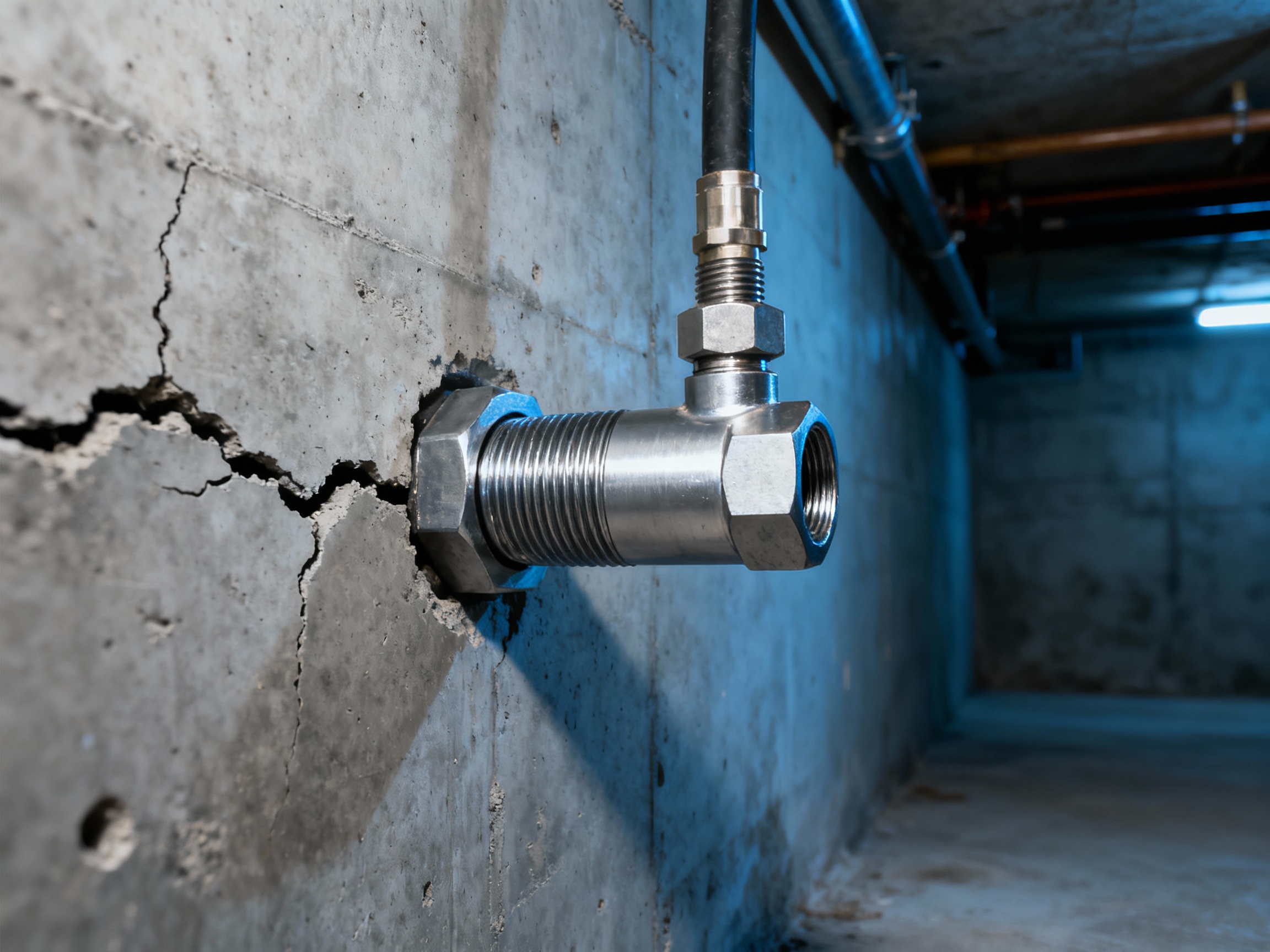
The optimal steel injection packer aligns with your specific project’s demands. Selecting the right mechanical injection packer ensures effective, durable injection results. A robust steel mechanical packer handles high pressure injection packer tasks efficiently. This guide provides a direct path to identifying the best concrete crack injection packer for your needs.
Key Takeaways
- Choose the right steel injection packer for your project. Consider the application, material, and pressure.
- Steel packers work for concrete repair, crack injection, and void filling. They handle high pressure well.
- Steel packers are good with polyurethane, epoxy, and cement grouts. Check material compatibility.
- Steel packers can handle high pressure, often over 1000 psi. This prevents leaks.
- Match the packer size to the crack size. Narrow cracks need smaller packers; wide cracks need larger ones.
- Steel packers cost more at first. They save money over time because you can reuse them.
- Install packers correctly. Clean holes, seat packers firmly, and tighten them well to prevent leaks.
- Use the right tools for packers. This includes drills, wrenches, pumps, and safety gear.
Key Factors for Choosing the Best Steel Injection Packer
Selecting the most suitable steel injection packer requires careful consideration of several critical factors. Project managers and technicians evaluate these elements to ensure effective and lasting results.
Application Type for Steel Injection Packers
The specific application dictates the type of steel injection packer required. Different scenarios demand different packer characteristics.
Concrete Repair Applications
For concrete repair, steel injection packers provide robust solutions. They effectively seal and strengthen damaged concrete structures. These packers are ideal for high-pressure injection of various grouts into concrete.
Crack Injection Applications
Crack injection applications frequently utilize steel packers. These packers ensure secure sealing and efficient delivery of injection materials into cracks. They are particularly effective for waterproofing concrete walls, slabs, and foundations.
Grouting and Void Filling Applications
Grouting and void filling applications also benefit from steel injection packers. These packers stabilize ground and rock, perform curtain grouting, and seal leaks around through-wall pipes. Steel packers are the preferred choice for applications demanding very high injection pressures. They are also well-suited for applications involving acrylate/acrylic gels due to their strong resistance to oxidizing components in these materials.
Injection Material Compatibility with Steel Injection Packers
Compatibility with the injection material is paramount for successful projects. Steel injection packers work with a wide range of materials.
Polyurethane Injection Packers
Steel packers are particularly well-suited for polyurethane injections. They handle polyurethane injection foam resins, polyurethane combi injection resins, and polyurethane resins effectively. Their durability and high-pressure resistance make them ideal for these materials.
Epoxy Injection Packers
Epoxy injection resins are also compatible with steel injection packers. These packers ensure precise delivery of epoxy for structural crack and joint repair.
Cementitious Grout Injection Packers
Steel injection packers can accommodate cementitious lutes up to a grain size of 0.5 mm. This makes them suitable for various grouting tasks. They also work with injection gels, silicate injection solutions, and HIS Hybrid-Injection-System materials.
Pressure Requirements for Steel Injection Packers
The required injection pressure significantly influences packer selection. Steel packers offer solutions for both low and high-pressure scenarios.
Low-Pressure Steel Injection Packers
While steel packers excel in high-pressure environments, specific designs can accommodate lower pressure applications. These packers still offer superior durability compared to plastic alternatives.
High-Pressure Steel Injection Packers
Steel injection packers are specifically designed for high-pressure use. They withstand pressures of 1000 psi and more without leaking or moving from the drill hole. A snug fit and solid connection are crucial for safety and successful injection in these demanding conditions.
Crack Dimensions and Steel Injection Packer Selection
Crack dimensions significantly influence the selection of the appropriate steel injection packer. Project managers assess these measurements to ensure effective material delivery and a secure fit.
Narrow Crack Steel Injection Packers
Smaller cracks necessitate finer packers for effective material penetration. The diameter of an injection packer directly relates to the size of the injection hole. This hole is determined by the crack dimensions. For instance, a PI-SPH 10/110 packer is designed for a 10mm injection hole. It has an unexpanded rubber diameter of 9.7mm. Similarly, a PI-SPH 14/110 packer suits a 14mm hole with a 13.3mm unexpanded diameter. This demonstrates how packer size precisely matches crack-derived hole dimensions.
Wide Crack Steel Injection Packers
Larger cracks can accommodate more robust options. These cracks often require packers with larger diameters to ensure proper sealing and efficient material flow. The increased surface area allows for a stronger mechanical grip within the drill hole.
Deep Crack Steel Injection Packers
Deep cracks present unique challenges. They often require longer steel injection packers to reach the full depth of the crack. This ensures complete material distribution throughout the entire crack profile. Proper packer length prevents shallow injections and ensures a comprehensive repair.
Budgeting for Steel Injection Packers
Budgeting plays a crucial role in selecting steel injection packers. Project planners consider both initial costs and long-term value.
Cost-Effectiveness of Steel Injection Packers
The initial cost of steel injection packers varies based on size and quantity. For example, a bag of 100pcs S-10 (1/2″ x 3.5″) Stainless Steel Injection Packers costs around $54.51. A bag of 100pcs S-15 (1/2″ x 5″) Stainless Steel Injection Packers costs approximately $65.19. Individual packers, like the Seal Boss 13-115S 1/2 x 4 Steel Packer, can cost about $5.50. The Seal Boss 13-60S Steel Packer 1/2 x 3 costs around $3.60. These prices reflect the quality and durability of steel construction.
Reusability and Long-Term Value of Steel Injection Packers
Reusable brass or metal packers have a higher upfront cost but offer better ROI for frequent use. Consider the total cost of ownership, including replacement frequency and downtime. High-quality injection packers ensure consistent performance and reduce the risk of failure during critical operations. Look for packers made from corrosion-resistant materials like brass, stainless steel, or engineering-grade polymers, and reusable designs that can withstand multiple injection cycles. Brass/Stainless Steel Surface Mount packers offer high strength, durability, reusability in multiple applications, and resistance to high injection pressures. Metal Double-Port Packers are durable and reusable with high pressure and wear resistance. Threaded Injection Packers are reusable and durable, supporting high injection pressures for permanent repairs.
Reusable steel injection packers provide significant long-term value. Their robust construction allows for multiple uses, reducing the need for frequent replacements. This reusability lowers the overall project cost over time.
Top Steel Injection Packer Brands and Their Strengths
Choosing the right brand of steel injection packer significantly impacts project success. Different manufacturers specialize in various aspects, from high-pressure capabilities to specific material compatibility or overall value. Understanding these strengths helps professionals make informed decisions.
Brand A: Leading Steel Injection Packer for High-Pressure Use
Brand A establishes itself as a premier choice for demanding injection projects. Its products consistently deliver performance under extreme conditions.
Brand A Overview and Key Features
Brand A packers feature robust construction. Manufacturers craft them from durable steel and high-quality rubber. This design ensures maximum strength. These packers offer good resistance to oxidizing components found in acrylate/acrylic gels. They are engineered to ensure dependable performance and accuracy in chemical injection applications. Brand A packers withstand high injection pressures without leaking or dislodging from the drill hole. They are ideal for medium to high-pressure injections.
Ideal Applications for Brand A Steel Injection Packers
Professionals often select Brand A for critical structural repairs. These include projects involving high-pressure chemical injection, such as sealing active water leaks in concrete. Their robust nature makes them suitable for ground stabilization and curtain grouting where significant force is necessary. When working with acrylate/acrylic gels, Brand A’s chemical resistance proves invaluable.
Pros and Cons of Brand A Steel Injection Packers
- Pros:
- Exceptional pressure resistance, ideal for high-pressure applications.
- Superior durability due to robust steel construction.
- Reliable performance in challenging chemical injection scenarios.
- Excellent chemical resistance, particularly with acrylate/acrylic gels.
- Cons:
- Higher initial cost compared to some alternatives.
- May be over-engineered for low-pressure or less critical applications.
Brand B: Best Value Steel Injection Packer Options
Brand B provides a compelling option for projects balancing quality with cost-effectiveness. They offer reliable performance without compromising budget constraints.
Brand B Overview and Key Features
Brand B focuses on delivering a strong balance of quality and affordability. Their steel injection packer models feature solid construction suitable for a wide range of standard applications. They often come in various common diameters and lengths, providing versatility for general repair tasks. These packers prioritize ease of installation and removal, aiming to reduce labor time on site.
Ideal Applications for Brand B Steel Injection Packers
Contractors frequently choose Brand B for general concrete crack repair, waterproofing basements, and routine grouting tasks. Their value proposition makes them ideal for projects where budget is a key consideration but a durable steel solution is still required. They perform well in applications involving standard polyurethane and epoxy injections at moderate pressures.
Pros and Cons of Brand B Steel Injection Packers
- Pros:
- Cost-effective, offering good value for money.
- Versatile for a broad range of common injection applications.
- Easy to install and remove, improving job site efficiency.
- Provides reliable sealing for typical crack injection scenarios.
- Cons:
- May not handle extreme high pressures as effectively as specialized brands.
- Potentially fewer specialized features for niche applications.
Brand C: Steel Injection Packers for Specific Material Compatibility
Brand C distinguishes itself by offering steel injection packers optimized for particular injection materials. This specialization ensures maximum effectiveness and compatibility.
Brand C Overview and Key Features
Brand C, exemplified by companies like Riddhi Enterprise, designs its steel injection packers with specific material compatibility in mind. Their products work seamlessly with both epoxy and polyurethane (PU) injection grouting. This focus ensures the packer material and design do not react negatively with the injection resin, preventing premature curing or degradation. They often feature precise sealing mechanisms to handle the unique viscosities and curing properties of these specific materials.
Ideal Applications for Brand C Steel Injection Packers
Professionals turn to Brand C when the injection material is a known variable, such as in structural epoxy repairs or flexible polyurethane waterproofing. Projects requiring guaranteed compatibility with these specific grouts benefit greatly from Brand C’s specialized offerings. This includes sealing concrete cracks with epoxy for structural integrity or injecting polyurethane for water-stopping applications.
Pros and Cons of Brand C Steel Injection Packers
- Pros:
- Optimized for specific injection materials like epoxy and polyurethane.
- Minimizes the risk of material incompatibility issues.
- Ensures reliable and effective delivery of specialized grouts.
- Provides confidence in the long-term performance of the injected material.
- Cons:
- Potentially less versatile for projects using a wide array of different injection materials.
- Product line might be narrower, focusing on their compatible materials.
Other Notable Steel Injection Packer Brands
The market also features other reputable brands offering specialized solutions.
Specialized Steel Injection Packer Offerings
Some brands focus on unique designs, such as packers with specific head types (e.g., Zerk or button head) or those designed for extremely narrow or wide cracks. These specialized offerings cater to very particular project requirements.
Niche Steel Injection Packer Solutions
Niche brands often provide innovative solutions for unusual challenges. This might include packers for extremely deep injections, those with enhanced corrosion resistance for harsh environments, or designs that facilitate faster installation in specific scenarios. These brands fill gaps in the market with highly targeted products.
Other Notable Steel Injection Packer Brands
The market for injection packers extends beyond the major players. Many other brands offer specialized or niche solutions. These companies often focus on specific challenges or unique project requirements. They provide valuable alternatives for contractors seeking precise tools for particular jobs.
Specialized Steel Injection Packer Offerings
Some manufacturers distinguish themselves through highly specialized product lines. These brands develop packers with unique features designed for specific applications. For instance, some companies offer packers with distinct head types. Zerk fitting packers, for example, provide a common connection point for grease guns, which some injection pumps also utilize. Button head fitting packers offer a low-profile design, useful in tight spaces. Other specialized offerings include packers engineered for extremely narrow cracks. These packers feature smaller diameters and often a more refined sealing mechanism. Conversely, some brands produce packers for exceptionally wide cracks. These larger packers ensure a robust seal and efficient material delivery in broader fissures. These specialized designs cater to very particular project requirements. They ensure optimal performance where standard packers might fall short.
Niche Steel Injection Packer Solutions
Niche brands often provide innovative solutions for unusual challenges. These companies identify gaps in the market and develop products to fill them. For example, some brands offer packers designed for extremely deep injections. These packers feature extended lengths, ensuring the injection material reaches the full depth of the crack or void. Other niche solutions focus on enhanced corrosion resistance. They use specialized alloys or coatings for harsh chemical environments. This ensures the packer’s integrity during prolonged exposure to aggressive injection materials or corrosive ground conditions. Furthermore, some brands develop designs that facilitate faster installation in specific scenarios. This might include quick-release mechanisms or self-sealing features. These innovations improve job site efficiency and reduce labor time. Niche brands provide highly targeted products, solving unique problems with precision and effectiveness.
Comparing Popular Steel Injection Packer Models
Selecting the right steel injection packer often comes down to comparing specific models. Each model offers unique advantages tailored to different project demands. This section examines popular choices from leading brands, highlighting their design, ideal applications, and user experiences.
Model X (Brand A): Best Steel Injection Packer for Concrete Crack Repair
Model X from Brand A stands out as a top performer for challenging concrete crack repair projects. Its design emphasizes strength and reliability under high pressure.
Model X Specifications and Design
Model X features a robust construction designed for demanding environments. It comes in various sizes to accommodate different casing and tubing requirements. The design ensures a secure fit and efficient material delivery. Here are some typical specifications for Model X:
| Casing Size (in) | Weight (lbs/ft) | Wall Thickness (mm) | Tubing Size (in) | Packer OD (in) | Packer ID (in) |
|---|---|---|---|---|---|
| 4 | 9.5 – 11 | 5.74 – 6.65 | 1.9 | 3.25 | 1.5 |
| 4.5 | 9.5 – 13.5 | 5.21 – 7.37 | 2.375 | 3.75 | 1.94 |
| 4.5 | 13.5 – 15.1 | 7.37 – 8.56 | 2.375 | 3.65 | 1.94 |
| 5 | 11.5 – 15 | 5.59 – 7.52 | 2.375 | 4.125 | 1.94 |
| 5 | 18 – 21.4 | 9.19 – 7.72 | 2.375 | 4 | 1.94 |
| 5.5 | 14 – 20 | 6.2 – 9.17 | 2.875 | 4.625 | 2.38 |
| 5.5 | 20 – 23 | 9.17 – 10.54 | 2.875 | 4.5 | 2.38 |
| 5.75 | 18.1 – 19.7 | 7.72 – 8.51 | 2.875 | 4.875 | 2.38 |
| 5.75 | 21.8 – 24.2 | 9.53 – 10.67 | 2.875 | 4.625 | 2.38 |
| 6.625 | 20 – 24 | 7.32 – 8.94 | 3.5 | 5.75 | 3 |
| 6.625 | 24 – 28 | 8.94 – 10.59 | 3.5 | 5.5 | 3 |
| 7 | 20 – 26 | 6.91 – 9.19 | 3.5 | 6 | 3 |
| 7 | 26 – 32 | 9.19 – 11.51 | 3.5 | 5.875 | 3 |
This table illustrates the range of sizes available. It shows how Model X adapts to various well conditions and injection needs. The robust design ensures it handles significant pressure without failure.
Best Use Cases for Model X Steel Injection Packer
Model X excels in high-pressure concrete crack repair. Professionals use it for structural repairs in bridges, dams, and industrial facilities. It performs exceptionally well when sealing active water leaks in concrete foundations. Its durability makes it suitable for projects requiring aggressive chemical injections, such as those involving acrylate/acrylic gels.
User Feedback on Model X Steel Injection Packer Performance
Users consistently praise Model X for its reliability. Contractors report minimal leakage and blow-out risks, even under extreme pressures. They appreciate its secure mechanical expansion within drill holes. Many highlight its robust construction, which contributes to successful outcomes in critical repair jobs.
Model Y (Brand B): Ideal Steel Injection Packer for Epoxy Injection
Model Y from Brand B offers an excellent balance of performance and value, making it a preferred choice for epoxy injection applications. It provides reliable sealing without excessive cost.
Model Y Specifications and Design
Model Y typically features a streamlined design optimized for epoxy injection. Manufacturers construct it from high-quality steel with a durable rubber sleeve. It often comes in standard diameters like 1/2 inch and 5/8 inch, with lengths ranging from 3 to 6 inches. This design ensures compatibility with common epoxy injection pumps and materials. Its internal mechanism allows for smooth flow of viscous epoxy resins.
Best Use Cases for Model Y Steel Injection Packer
Model Y is ideal for structural crack repair using epoxy resins. It effectively seals hairline cracks and larger fissures in concrete slabs, walls, and foundations. Contractors frequently choose it for projects where precise epoxy delivery is crucial for restoring structural integrity. Its design minimizes material waste and ensures thorough crack penetration.
User Feedback on Model Y Steel Injection Packer Performance
Users commend Model Y for its ease of installation and dependable performance with epoxy. They note its consistent sealing capabilities, which prevent epoxy backflow. Many appreciate its cost-effectiveness, stating it delivers professional results without breaking the budget. Technicians find it straightforward to use, contributing to efficient project completion.
Model Z (Brand C): Steel Injection Packer for High-Volume Grouting
Model Z from Brand C is engineered for efficiency in high-volume grouting and void-filling applications. Its design facilitates rapid and extensive material delivery.
Model Z Specifications and Design
Model Z often features a larger internal diameter and robust fittings to accommodate high flow rates. Manufacturers construct it from heavy-duty steel, ensuring durability during prolonged grouting operations. It typically includes a button-head or Zerk fitting for quick connection to high-volume grout pumps. Available in various lengths and diameters, Model Z is designed for deep penetration and wide distribution of cementitious grouts, polyurethane foams, and other void-filling materials.
Best Use Cases for Model Z Steel Injection Packer
Model Z excels in large-scale grouting projects. These include ground stabilization, curtain grouting, and filling significant voids in concrete or rock. It is the go-to choice for sealing large construction joints and around through-wall pipes where substantial material volumes are necessary. Its design supports continuous injection, making it efficient for extensive waterproofing and stabilization tasks.
User Feedback on Model Z Steel Injection Packer Performance
Users consistently highlight Model Z’s efficiency in high-volume applications. They report excellent material flow and minimal clogging, even with thicker grouts. Contractors value its robust build, which withstands the demands of large-scale projects. Many users praise its ability to deliver consistent results in challenging void-filling scenarios, saving time and labor.
Side-by-Side Comparison of Steel Injection Packer Models
Choosing the optimal injection packer requires a detailed comparison of available models. This section provides a side-by-side analysis of Model X (Brand A), Model Y (Brand B), and Model Z (Brand C). It highlights their differences in material compatibility, pressure ratings, installation methods, durability, reusability, and cost.
Material Compatibility Across Models
Different injection packers excel with specific materials. Each model offers distinct advantages based on the chemical properties of the grout.
- Model X (Brand A): This model demonstrates broad compatibility. It effectively handles polyurethane injection foam resins, polyurethane combi injection resins, and standard polyurethane resins. Model X also shows good resistance to oxidizing components found in acrylate/acrylic gels. This makes it suitable for diverse chemical injection applications.
- Model Y (Brand B): Model Y primarily focuses on epoxy injection resins. Its design ensures precise delivery and optimal sealing for these materials. It also performs well with standard polyurethane grouts.
- Model Z (Brand C): Model Z specializes in high-volume grouting. It accommodates cementitious lutes up to a 0.5 mm grain size. This model also works efficiently with injection gels, silicate injection solutions, and HIS Hybrid-Injection-System materials.
Pressure Ratings of Top Steel Injection Packers
Pressure requirements vary significantly across injection projects. Each model handles different pressure ranges effectively.
- Model X (Brand A): Model X is a leading choice for high-pressure applications. It withstands pressures of 1000 psi and more. Its robust construction prevents leakage or movement from the drill hole under extreme force.
- Model Y (Brand B): Model Y offers reliable performance for moderate to high-pressure epoxy and polyurethane injections. It provides a secure seal for typical crack injection scenarios, ensuring material delivery without blow-outs.
- Model Z (Brand C): Model Z is engineered for high-volume grouting, which often involves significant pressure. Its heavy-duty construction ensures durability during prolonged operations. It maintains integrity under the continuous pressure required for extensive void filling and ground stabilization.
Installation Methods for Various Steel Injection Packers
Installation efficiency impacts project timelines and labor costs. Different models feature distinct installation characteristics.
- Model X (Brand A): Installers secure Model X through mechanical expansion within the drill hole. This method provides an excellent seal, even in wet or pressurized water conditions. The process involves drilling a precise hole and then tightening the packer to expand its rubber sleeve.
- Model Y (Brand B): Model Y prioritizes ease and speed of installation. Its design allows for quick insertion and secure seating in pre-drilled holes. Technicians typically use standard tightening tools to activate its sealing mechanism.
- Model Z (Brand C): Model Z often features a button-head or Zerk fitting. This design allows for quick connection to high-volume grout pumps. Its installation focuses on facilitating rapid and continuous material delivery, often in larger diameter holes.
Durability and Reusability of Steel Injection Packers
Durability and reusability offer long-term value. The construction materials and design influence these factors.
- Model X (Brand A): Model X boasts superior durability. Its robust steel construction and high-quality rubber sleeve ensure a long service life. This model is highly reusable, offering excellent return on investment for frequent, demanding applications.
- Model Y (Brand B): Model Y provides good durability for its price point. Its solid construction allows for multiple uses in standard applications. Proper cleaning and maintenance extend its lifespan, making it a cost-effective reusable option.
- Model Z (Brand C): Model Z is built for the rigors of high-volume grouting. Its heavy-duty steel construction ensures resilience against wear and tear. This model is durable and reusable, designed to withstand continuous operation and high material flow.
Cost Analysis of Popular Steel Injection Packer Models
Budget considerations are crucial for project planning. The cost of each model reflects its features and intended use.
- Model X (Brand A): Model X represents a premium investment. Its higher initial cost reflects its exceptional pressure resistance, superior durability, and specialized performance in critical applications. Its reusability, however, contributes to long-term cost-effectiveness.
- Model Y (Brand B): Model Y offers a best-value proposition. It provides reliable performance for common epoxy and polyurethane injections at a more accessible price point. Its balance of quality and affordability makes it a popular choice for general repair tasks.
- Model Z (Brand C): Model Z’s cost aligns with its specialized high-volume capabilities. While potentially higher than basic packers, its efficiency in large-scale grouting projects reduces labor and overall project time. This makes it a cost-effective solution for extensive void filling and stabilization.
Advanced Steel Injection Packer Selection: Beyond the Basics
Selecting the right injection packer involves more than just basic considerations. Professionals often delve into advanced features and material science. This deeper understanding ensures optimal performance for specialized projects.
Understanding Packer Mechanisms: Mechanical vs. Hydraulic Steel Injection Packers
Packer mechanisms define how they secure themselves within a drill hole. Two primary types exist: mechanical and hydraulic.
Advantages of Mechanical Steel Injection Packers
Mechanical packers use a physical tightening action. A technician turns a nut or bolt, which expands a rubber sleeve. This action creates a tight seal against the drill hole wall. Mechanical packers offer precise control over the expansion force. They provide a very secure and reliable seal, especially in irregular or rough boreholes. Their robust design makes them suitable for high-pressure applications.
Advantages of Hydraulic Steel Injection Packers
Hydraulic packers utilize fluid pressure for expansion. An external pump injects fluid into the packer, causing it to expand. This method allows for rapid installation and removal. Hydraulic packers are often preferred in situations requiring quick deployment or in very deep holes where mechanical tightening becomes impractical. They can also adapt to slight variations in hole diameter more easily.
Material Composition: Stainless Steel vs. Other Metals for Injection Packers
The material composition of an injection packer significantly impacts its durability and chemical resistance.
Benefits of Stainless Steel Injection Packers
Builders often choose stainless steel for maximum protection in consistently wet or submerged applications. It offers superior corrosion resistance compared to other materials like carbon steel and brass. This resistance ensures the packer maintains its integrity when exposed to water, chemicals, and aggressive injection materials. Stainless steel packers also provide excellent strength, handling high injection pressures without deformation. Their longevity contributes to cost-effectiveness over time.
Considerations for Other Metal Injection Packers
Other metals, such as brass or carbon steel, also find use in injection packers. Brass offers good corrosion resistance in certain environments and is often more economical than stainless steel. Carbon steel packers are strong but require protective coatings to prevent rust, especially in wet conditions. The choice of metal depends on the specific project environment, chemical exposure, and budget constraints.
Specialized Steel Injection Packer Designs
Manufacturers develop specialized packer designs to address unique project challenges. These designs enhance efficiency and effectiveness in specific scenarios.
Zerk Fitting Steel Injection Packers
Zerk fitting packers feature a standard grease nipple connection. This design allows for quick and secure attachment of injection pumps. Many injection pumps use a similar connection, making Zerk fittings highly convenient. They facilitate rapid setup and disconnection, improving workflow on the job site.
Button Head Fitting Steel Injection Packers
Button head fitting packers offer a low-profile connection point. Their design minimizes protrusion from the concrete surface. This feature is particularly useful in tight spaces or when the packer needs to remain flush with the surface. They provide a secure connection for injection hoses.
Double-Casing Steel Injection Packers
Double-casing packers incorporate two concentric tubes. This design allows for more complex injection procedures. They can facilitate flushing or multi-stage injections. Some examples of specialized steel injection packer offerings include:
- Steel Injection Packer With Flat Nipple
- Flat Head Nipple Injection Packers Steel 18*170mm
- General Steel Injection Packer (available in single rubber/double rubber types and various sizes like 8*80MM)
These specialized designs cater to specific needs, ensuring optimal performance for diverse injection projects.
Installation and Removal for Optimal Steel Injection Packer Performance
Proper installation and removal techniques are crucial for maximizing the effectiveness and lifespan of injection packers. Following best practices ensures successful injection projects and maintains safety on the job site.
Proper Installation Techniques for Steel Injection Packers
Effective installation begins with careful preparation and precise execution. Each step contributes to a secure and leak-free injection.
Hole Preparation for Steel Injection Packers
Technicians must drill holes accurately. The drill bit size should match the packer’s diameter. After drilling, they thoroughly clean the holes. This removes dust, debris, and moisture. A clean hole ensures proper adhesion and expansion of the packer’s rubber sleeve.
Secure Seating of Steel Injection Packers
Workers insert the packer into the prepared hole. They push it firmly until the rubber sleeve sits completely within the concrete. For driven packers, a mallet helps seat them properly. Using a rubber hammer is often recommended to prevent damage to the packer head.
Tightening and Sealing Steel Injection Packers
Once seated, technicians tighten the packer. This action expands the rubber sleeve, creating a tight seal against the borehole wall. They check for a secure fit. A properly tightened packer prevents material leakage during injection.
Essential Tools for Steel Injection Packer Use
The right tools streamline the injection process and enhance safety. Professionals rely on specific equipment for efficient operation.
Drilling and Tightening Tools for Steel Injection Packers
Drills are necessary for creating the injection holes. Wrenches or specialized tightening tools secure the packers. For driven packers, mallets are essential. Mallets designed for SDS+ impact drills or hand hammers (preferably rubber) facilitate proper seating.
Injection Pumps Compatible with Steel Injection Packers
Various pumps deliver injection materials. Couplers connect the pump to the packer. A CPX / CPX-T four-jaw coupler works well for straight nipple grease, offering a life of 50-300 cycles and easy attachment/detachment even at high pressure. For flat grease nipples, a CPF / CPF-UP coupler slides on for tight administration, though it may slip above 100 BAR. It requires lubrication and repair kits for wear parts. For observing and controlling injection with a large flow diameter (⌀7.5mm), a CPC attachment with injection pliers is suitable for cement suspensions. A CPW attachment, made of Brass CW617N, is designed for wood injection, specifically for the PI-P 6.5/15 packer.
Safety Equipment for Steel Injection Packer Operations
Safety gear protects workers. This includes gloves, eye protection, and appropriate clothing. PI-CAPS, which are grease nipple clips, protect the head of calamites and prevent leaks, adding an extra layer of safety.
Troubleshooting Common Steel Injection Packer Issues
Even with careful planning, issues can arise. Knowing how to troubleshoot them saves time and resources.
Preventing Leaks in Steel Injection Packers
Leaks often result from improper tightening or damaged rubber sleeves. Technicians ensure the packer is fully expanded and seated correctly. They inspect packers for wear before use.
Addressing Clogs in Steel Injection Packers
Clogs occur when injection material hardens prematurely or contains particles too large for the packer. Workers flush packers immediately after use. They also ensure material compatibility and proper mixing.
Solutions for Damaged Steel Injection Packers
Damaged packers, such as those with stripped threads or torn rubber sleeves, require replacement. Attempting to reuse a compromised packer risks project failure and safety hazards.
The optimal steel injection packer precisely matches a project’s unique demands. Professionals must thoroughly evaluate the application, injection material, pressure requirements, and specific model features. This crucial assessment ensures the chosen packer aligns perfectly with the task. Informed selection ultimately leads to superior performance and lasting, effective results in all injection projects.
FAQ
What is a steel injection packer?
A steel injection packer is a robust mechanical device. It delivers injection materials into concrete and rock structures. Its steel body and expandable rubber sleeve ensure secure sealing. This allows for efficient material delivery through pre-drilled holes.
Why should I choose steel injection packers over plastic ones?
Steel injection packers offer superior strength and durability. They withstand high injection pressures without leakage or blow-out risks. Steel packers are also reusable, providing long-term value. Plastic packers are generally for lower pressure and single-use applications.
What types of injection materials are compatible with steel packers?
Steel packers are compatible with many materials. These include polyurethane, epoxy, and cementitious grouts. They also work with injection gels, silicate solutions, and HIS Hybrid-Injection-System materials. This versatility makes them suitable for various repair and grouting tasks.
Can technicians reuse steel injection packers?
Yes, technicians can reuse high-quality steel injection packers. Their robust construction allows for multiple uses. This reusability reduces overall project costs. Proper cleaning and maintenance extend their lifespan.
How do I select the correct size for a steel injection packer?
Select the packer size based on the drill hole diameter. The packer’s unexpanded rubber diameter should match the hole. This ensures a secure mechanical expansion. Consider the crack dimensions and depth for optimal material delivery.
What pressure ranges can steel injection packers handle?
Steel injection packers are designed for medium to very high pressures. They can withstand 1000 psi and more. Their robust construction prevents leakage or movement. This makes them ideal for demanding injection projects.
What are the main types of steel injection packer mechanisms?
The main types are mechanical and hydraulic. Mechanical packers expand with a tightening action. Hydraulic packers use fluid pressure for expansion. Both types offer secure sealing. The choice depends on project needs and installation preferences.
What tools are essential for using steel injection packers?
Essential tools include drills for holes and wrenches for tightening. Injection pumps deliver the material. Couplers connect the pump to the packer. Safety equipment like gloves and eye protection is also crucial.
Post time: Dec-04-2025